Procedural Generation Meets Car 3D Model Building Dynamic Game Worlds
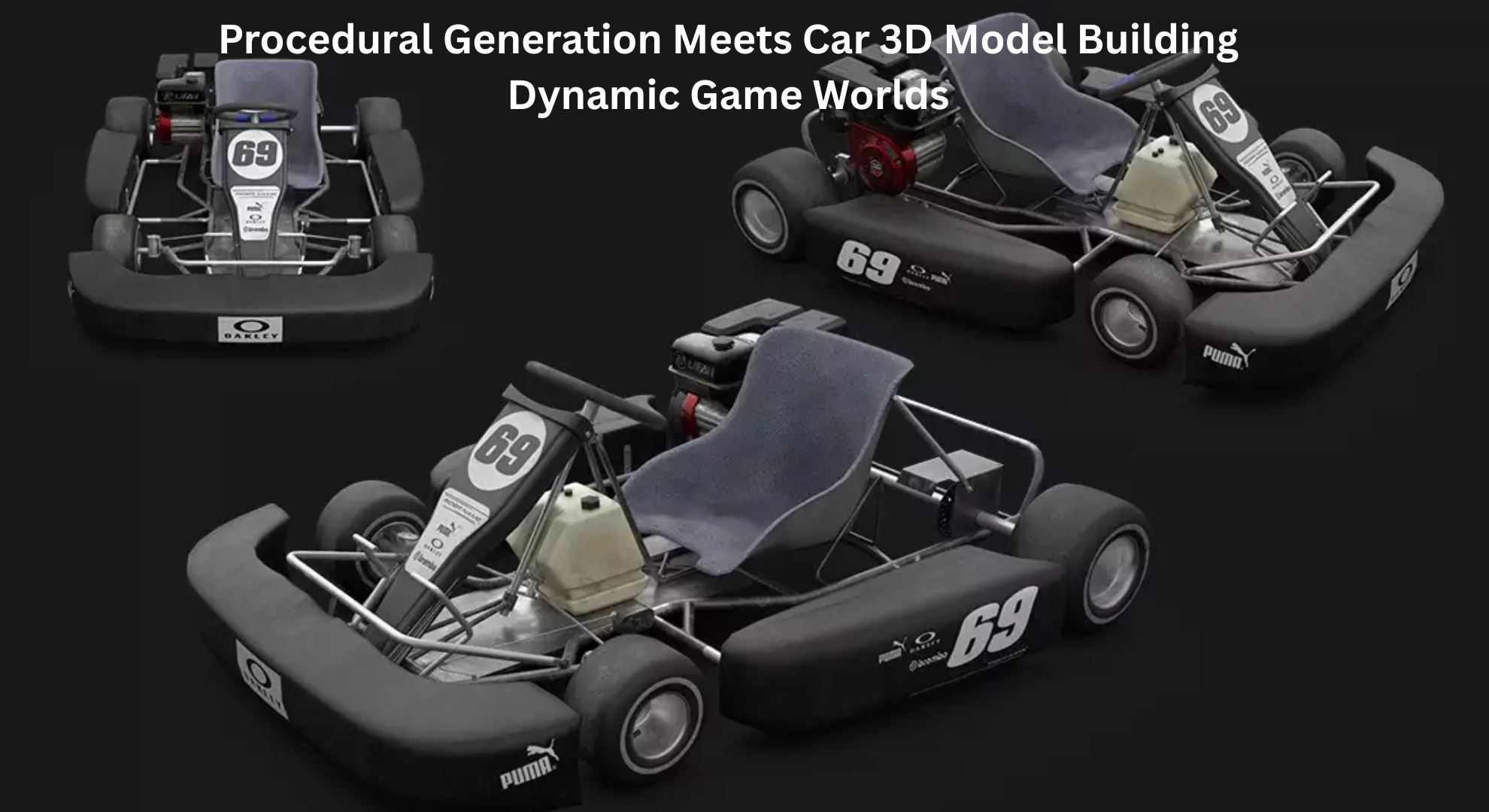
This combination enables developers to create immersive, dynamic, and near-infinite 3D game environments without the exhaustive manual labor previously required. From complex terrains to intricate cityscapes, procedural generation is changing how we think about game worlds — and how we model them.
What Is Procedural Generation?
In the context of game development, this means using mathematical formulas and rule-based logic to generate textures, maps, objects, and entire 3D game environments. When combined to 3D modeling, it allows for limitless variety and unpredictability while reducing the workload for game artists and designers.
Why Procedural Generation Matters in 3D Modeling Games
In many popular 3D modeling games, procedural generation powers the endless landscapes that players explore. Each game uses algorithmic logic to build its world dynamically, meaning no two player experiences are exactly alike. Artists still need to create the base 3D game assets, define rules, and shape the aesthetic style. However, once these assets are defined, the engine can remix and deploy them in countless variations.
Procedural Tools in Modern 3D Modeling Pipelines
The rise of procedural tools has transformed how 3D game environments are developed. Tools like:
- Substance Designer: Frequently used for procedural texturing.
- Unity and Unreal Engine: Features built-in procedural generation frameworks or plugins.
The result is a hybrid workflow that blends hand-crafted detail with machine-generated efficiency.
Creating Procedural 3D Game Assets
To understand the role of procedural generation, let’s break down how it affects 3D game assets:
- Modular Assets
Artists create modular pieces—walls, doors, roof sections—which procedural systems assemble into complete structures. These can be used to populate cities, dungeons, or space stations. - Terrain Elements
Procedural algorithms generate vast landscapes using base textures, elevation data, and biome rules. - Props 3D Model Integration
From treasure chests to torches, props 3D models are added to fill the world with detail.
This methodology gives artists more time to refine quality while ensuring large, explorable worlds are feasible within tight production schedules.
Dynamic Vehicle Models and Procedural Integration
Vehicles are a staple in open-world games.
- Place 3D vehicle modeling assets in locations that match the narrative (e.g., abandoned cars near ruins).
- Adjust mechanical parts on-the-fly to reflect upgrades or damage dynamically.
The beauty of procedural generation is that once a car 3D model is created, the system can generate hundreds of visual variations without touching the original mesh again.
Procedural Terrain and 3D Environment Modeling
Procedural generation excels at terrain creation—a crucial aspect of 3D environment modeling. Using heightmaps, noise functions, and erosion algorithms, developers can generate realistic mountains, valleys, and rivers. But the artist's hand still plays a vital role.For example:
- Hard Surface Modeling: For man-made structures like bridges, bunkers, or highways that span procedural terrain, 3D hard surface modeling is indispensable.
Hard Surface Modeling in Procedural Workflows
When it comes to architecture, weapons, vehicles, or mechanical props, Hard Surface Modeling remains king. But even here, procedural logic plays a vital role.Imagine building a dystopian city. Artists model:
- Individual windows, doors, and vents
- Building sections (corners, walls, rooftops)
- Antennas, fire escapes, piping
Procedural algorithms then use these assets to construct complete city blocks. This hybrid approach maintains artistic integrity while offering flexibility and scale.
Challenges of Procedural and 3D Modeling Integration
- Quality Control
Generated content may lack intentionality. Artists must define constraints and test thoroughly to avoid immersion-breaking visuals. - Performance Optimization
Dynamic generation can strain system resources. Efficient use of 3D game assets, LODs (Levels of Detail), and culling is essential. - Artistic Consistency
Different procedural components must align visually. - Over-Reliance on Automation
Procedural systems shouldn't replace design; they should extend it.
The Future: AI, Procedural Logic, and Game Worlds
Soon, game developers may use AI not only to generate terrain or 3D game environment, but also to evaluate, optimize, and even test those worlds.Imagine an AI that:
- Scans your 3D game environment for visual harmony
- Adjusts lighting procedurally for mood
- Suggests props 3D model placement based on player psychology
In tandem with human artists, this could unlock a new golden age for 3D modeling games.
Conclusion: A New Era for Game Development
Developers can now create richer, more varied 3D game environments while reducing the burden of manual modeling. For artists, it’s a chance to shift from repetitive asset creation to higher-level design thinking.Whether you're working on 3D vehicle modeling, fine-tuning props 3D model placements, or exploring vast procedural worlds, one thing is clear: the future of 3D modeling games is not just about building worlds—it's about creating worlds that build themselves.
